


FX Consolidator
Let's Monitor and Manage the FX Exposures
Author: Federico Bellanti
24 October 2026
Why use an analytical tool for FX risk
For Groups with a significant international presence and interests, FX risk does not arise in just one place. It builds up across individual companies, countries and currencies in which they buy and sell, and only comes together at consolidated level. Deciding whether, how much and how to hedge requires a complete picture, while the necessary information is often scattered across spreadsheets, different systems and counterparty proposals.
A hedging decision is rational when it can answer a few precise questions: how much could exchange rates cost us, which currencies and companies are driving the risk, how much does the proposed hedge actually reduce it, and at what cost? Without reliable figures, compiled consistently and comparable over time, the answer is left to intuition or the counterparty’s offer.
That is why I felt it was appropriate to complement my advisory work with an analytical tool.
I named it FX Consolidator, and it is Studio Bellanti’s proprietary software that helps CFOs make an informed decision about their hedging program: it consolidates the Group’s structure, flows and exchange rates, measures the risk to EBITDA and shows the impact of hedges.
Who it is for
Groups with multiple companies and currencies, from mid-sized businesses to holding companies, and Treasury teams looking for a rigorous overview without having to build and maintain their own models. As with all my advisory work, company size is not a criterion.
FX Consolidator
It is the tool I use to measure how exchange rates affect a Group’s EBITDA
For a Group with companies across multiple countries and currencies, answering a simple question—how much could exchange rates cost us this year, and how much do hedges really help?—means bringing together corporate structures, flows, budget rates and market history. FX Consolidator is the tool I developed to do this in a structured and repeatable way.
It is not a standalone product for purchase: it is part of my corporate advisory service. I use it with my clients to turn Group data into clear figures, which we then review together: hedging strategy, choice of instruments and monitoring.
From commercial flows to risk mapping
The Group structure, year by year
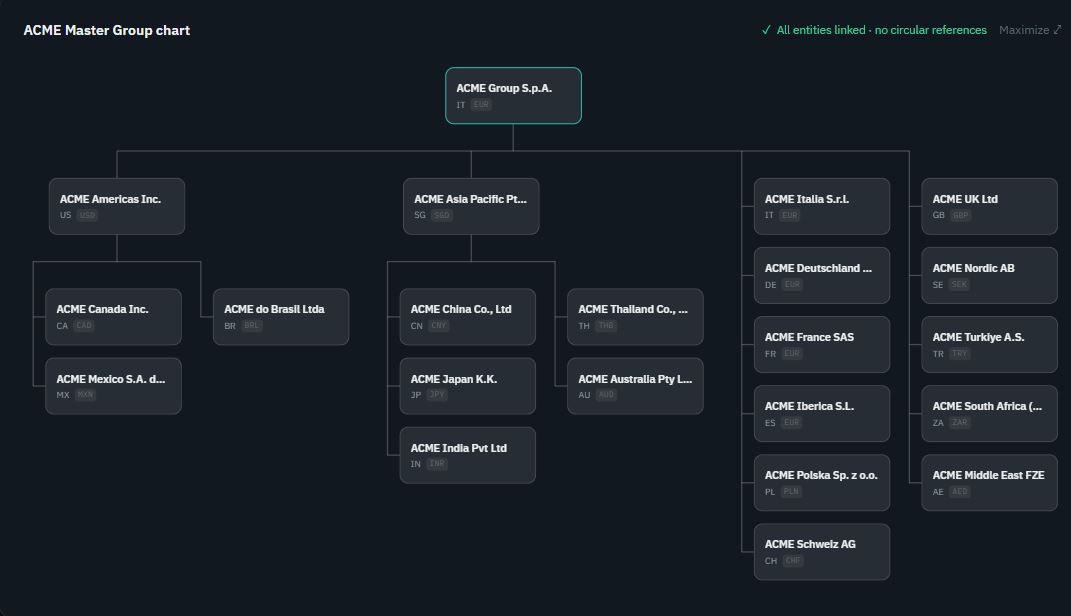
Companies, countries and functional currencies, organised in a consolidation structure, including intermediate holding companies and year-on-year changes.
Commercial flows by currency
Purchases and sales for each company, broken down by month and currency, can be uploaded from Excel. For high-inflation currencies, such as the Turkish lira, flows can be indexed to a strong currency.
How does it impact EBITDA?
Earnings at Risk
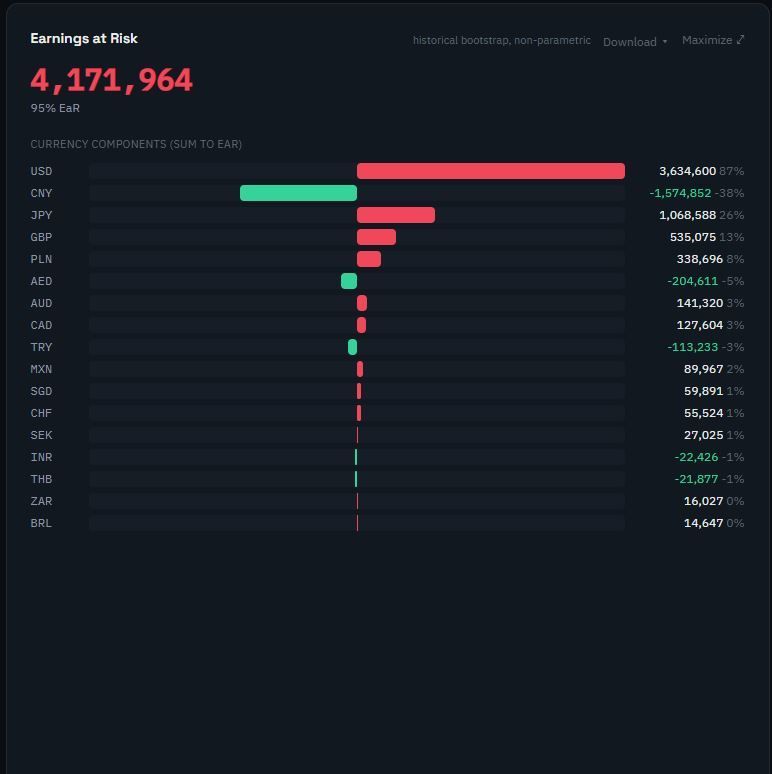
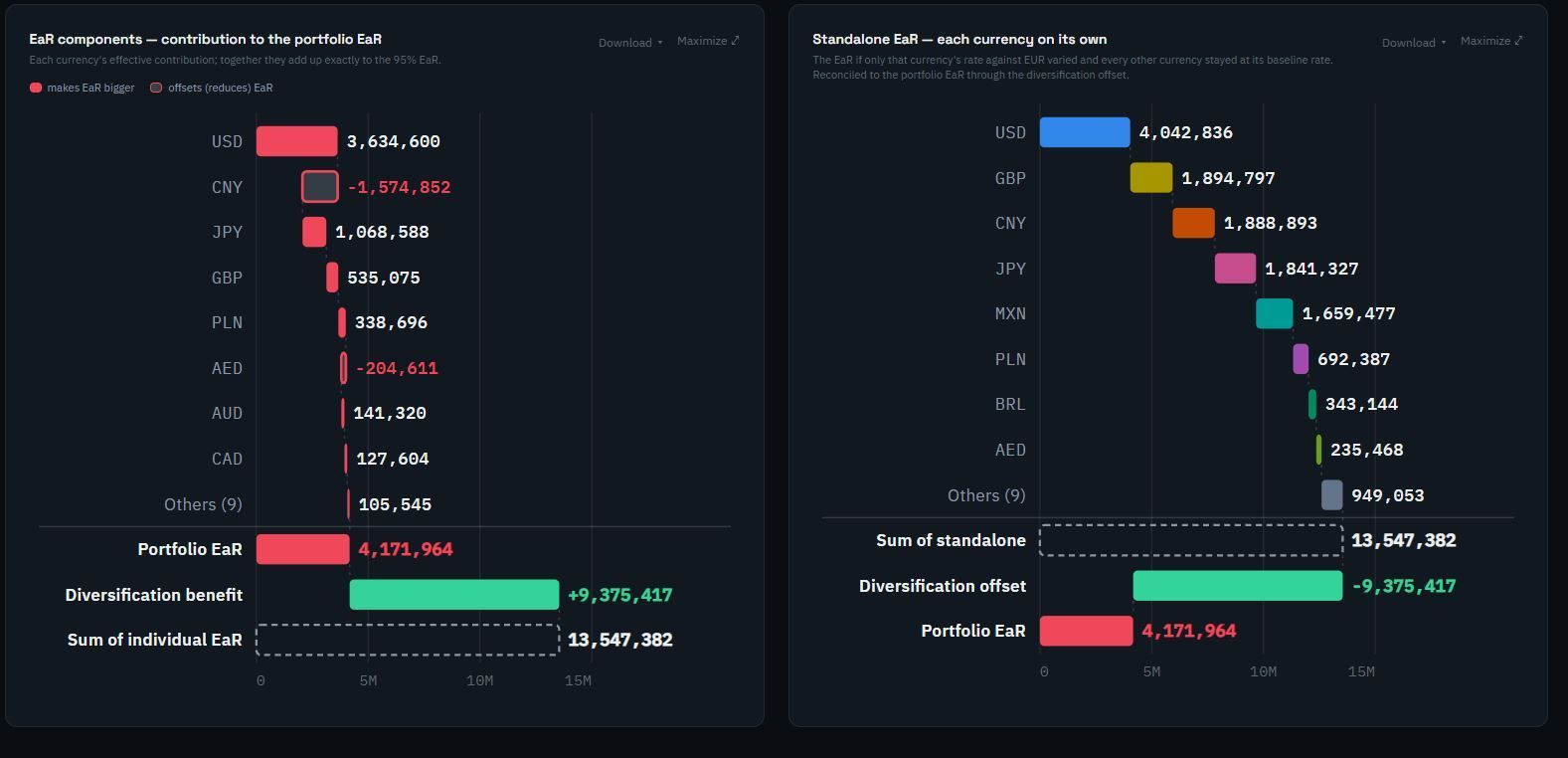
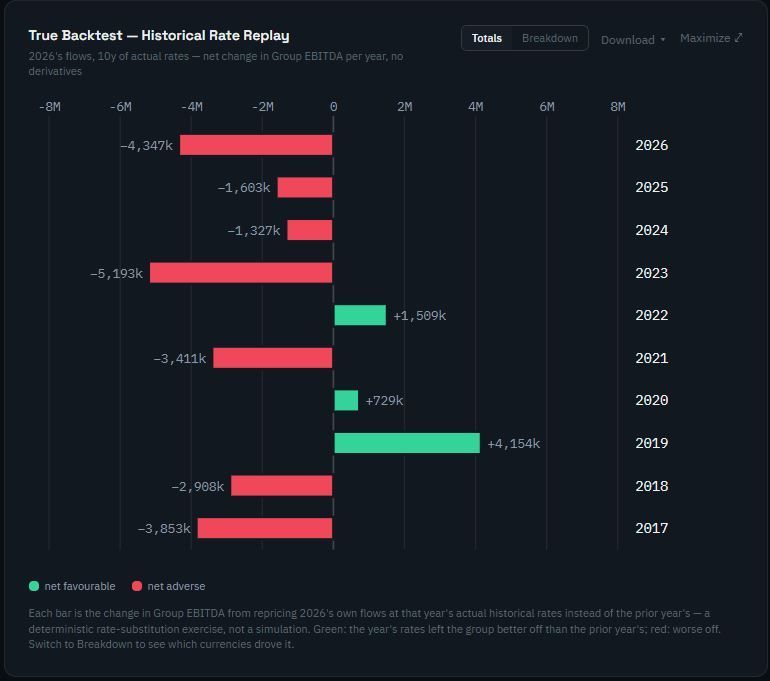
How much could EBITDA deteriorate due to exchange rate movements, at a confidence level of your choice (90%, 95%, 99%). The estimate is based on actual exchange rate history, assigning greater weight to recent data, or on historical stress scenarios
Where the risk comes from
Risk is broken down by currency and company: you can see which positions generate it, which offset it, and how much diversification helps.
The impact of exchange rates compared with the previous year
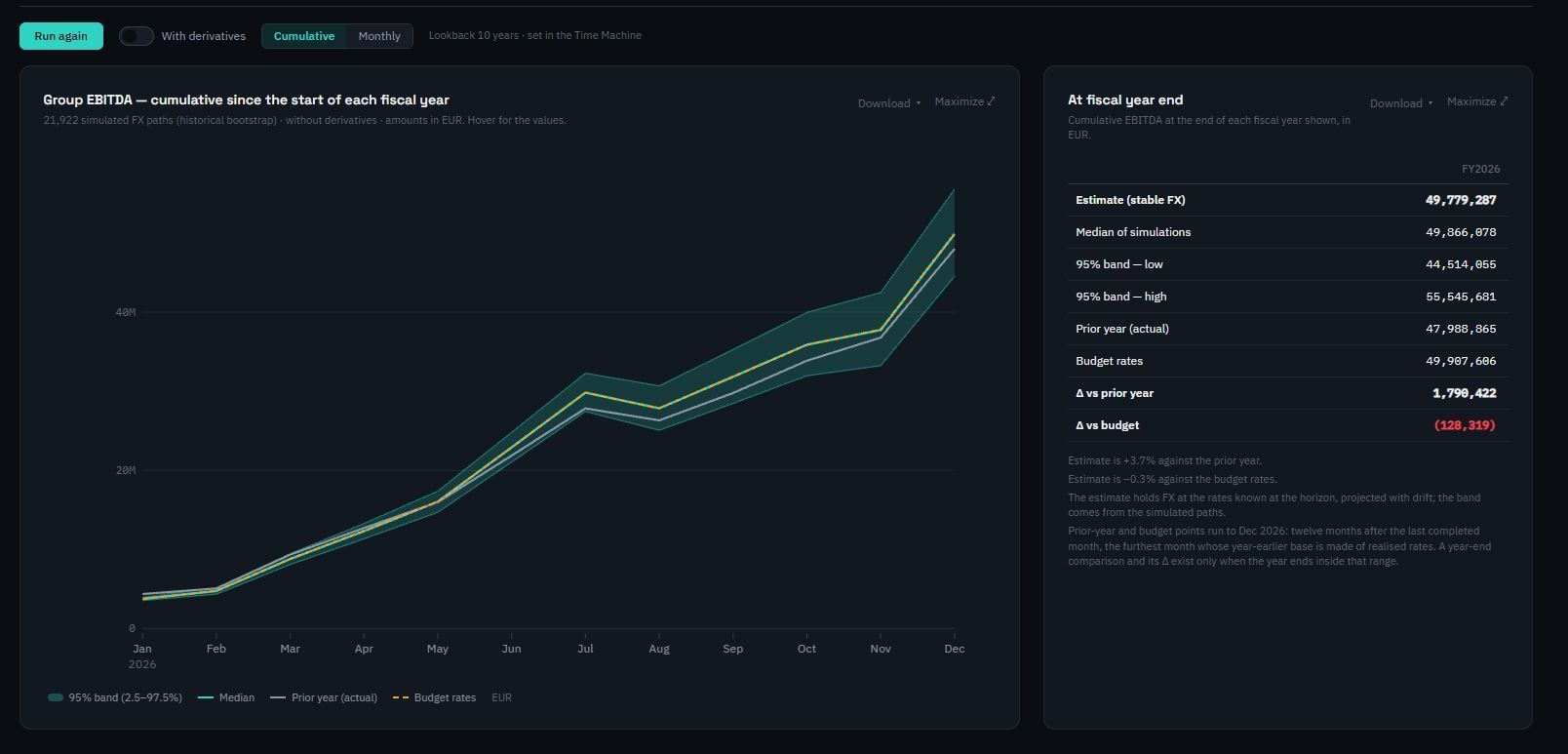
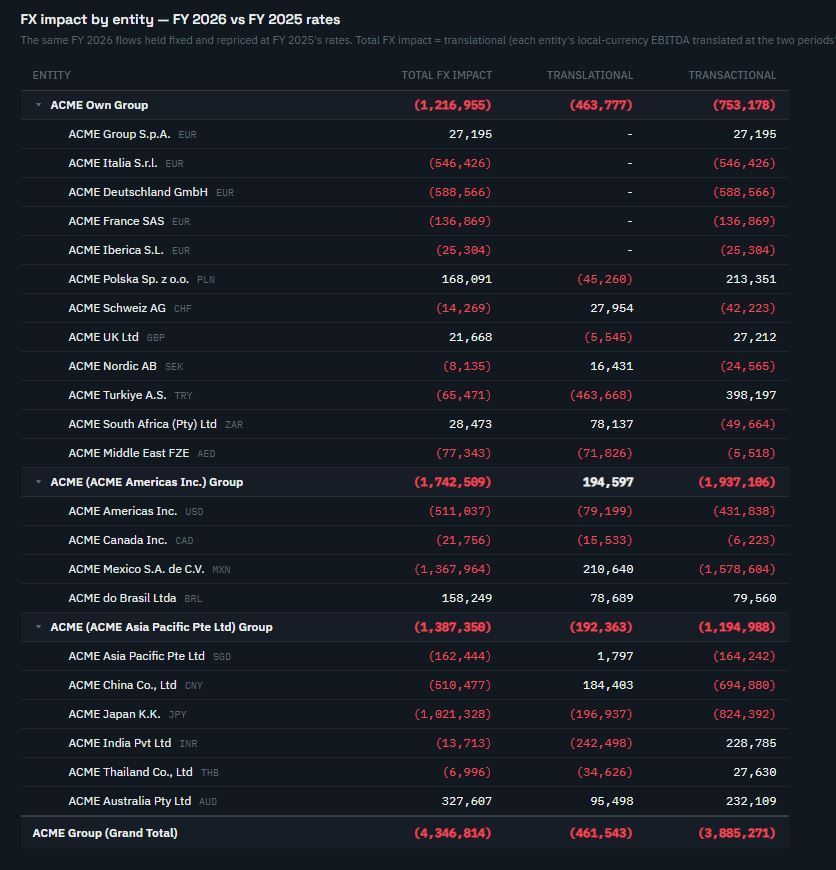
A single chart shows how exchange rates have already shifted EBITDA compared with the previous year’s rates, and where it could still end up by year-end.
Hedges, before and after
Forwards, vanilla options and knock-in options: enter the transactions—or those proposed by the financial institution—and see immediately how Earnings at Risk changes. “Do I really need this hedge, and to what extent?” becomes a matter of numbers.
The outlook for next year
Outlook and exposure
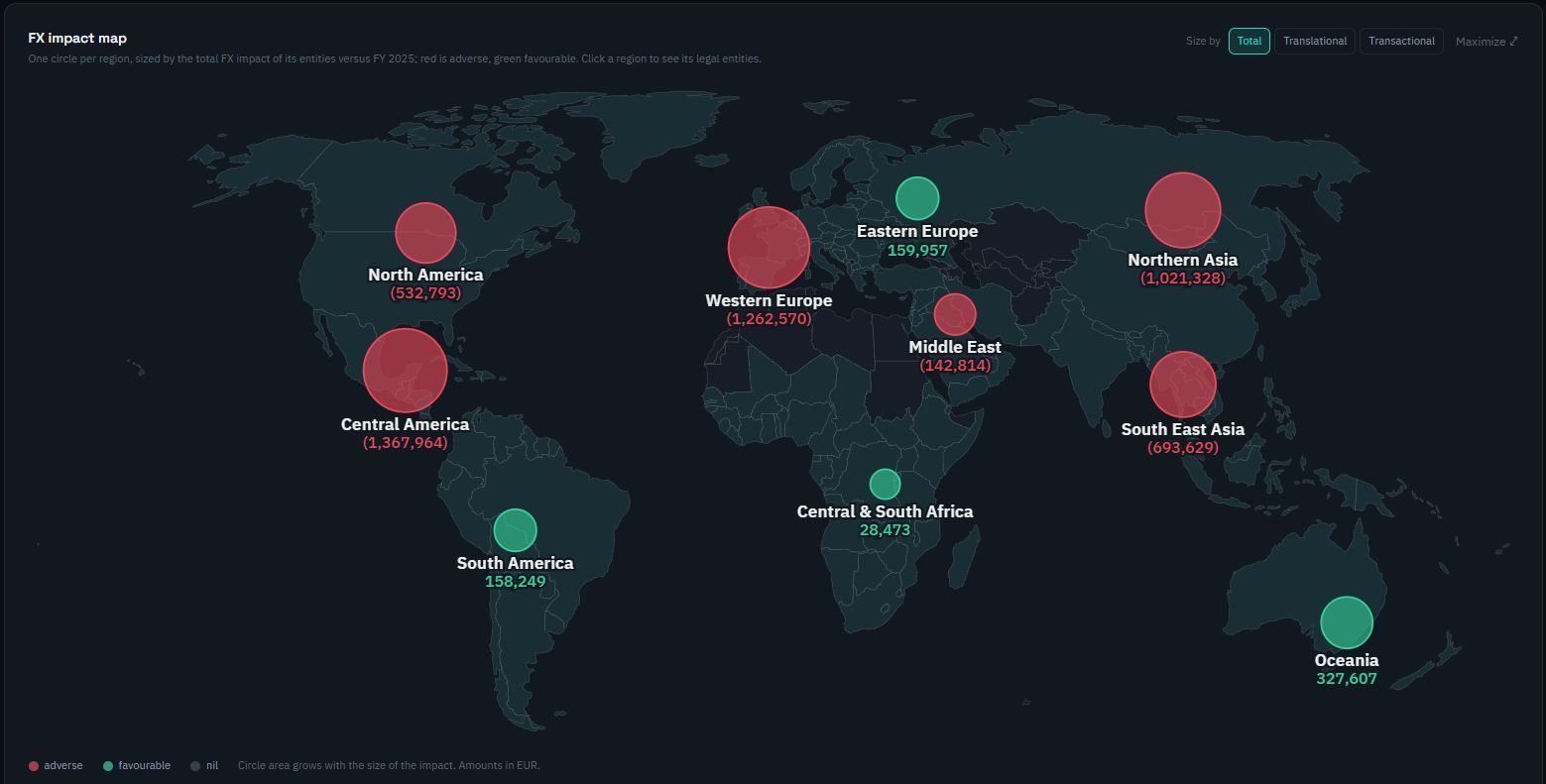
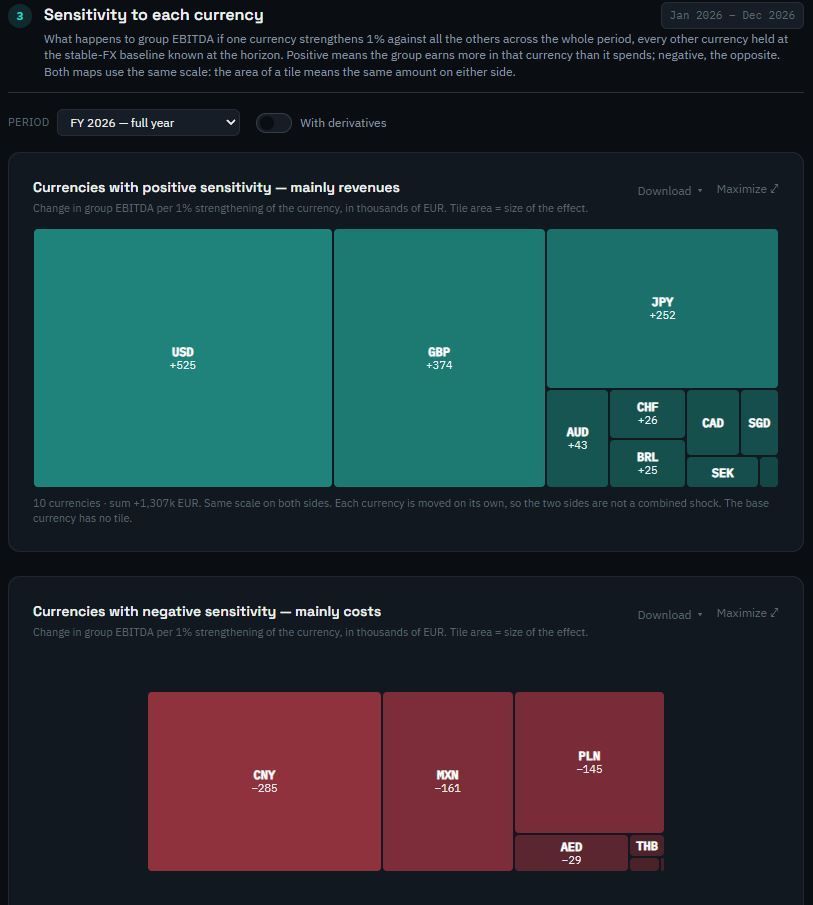
Expected EBITDA with a probability band through to the end of the next financial year, sensitivity to each currency, “what if” scenarios, exchange rate history and a map of the impact by country.
The most significant currency areas
We can identify the impact on Group EBITDA of changes in exchange rates
Take a look at the information we can provide
How I use it in my advisory work
The numbers are the starting point, not the conclusion. FX Consolidator allows me to join every meeting with a clear picture; the value of the advice lies in what we do with it.
- An initial Group foreign exchange risk map, shared with the CFO and Treasury.
- The development or review of the Hedging Policy, with limits and thresholds anchored to the Group’s figures.
- Independent assessment of hedges proposed by banks: pricing, scenarios and impact on risk, before and after.
- Periodic monitoring and reporting for the Board of Directors.
The tool does not execute transactions and is not connected to any bank: execution is always yours, and so is the decision.
Disclaimer:
FX Consolidator's analyses are simulations based on historical data and assumptions, intended to support decisions; they are not a guarantee of future results nor a recommendation to buy or sell financial instruments. All images are taken from a fictional demonstration group.